
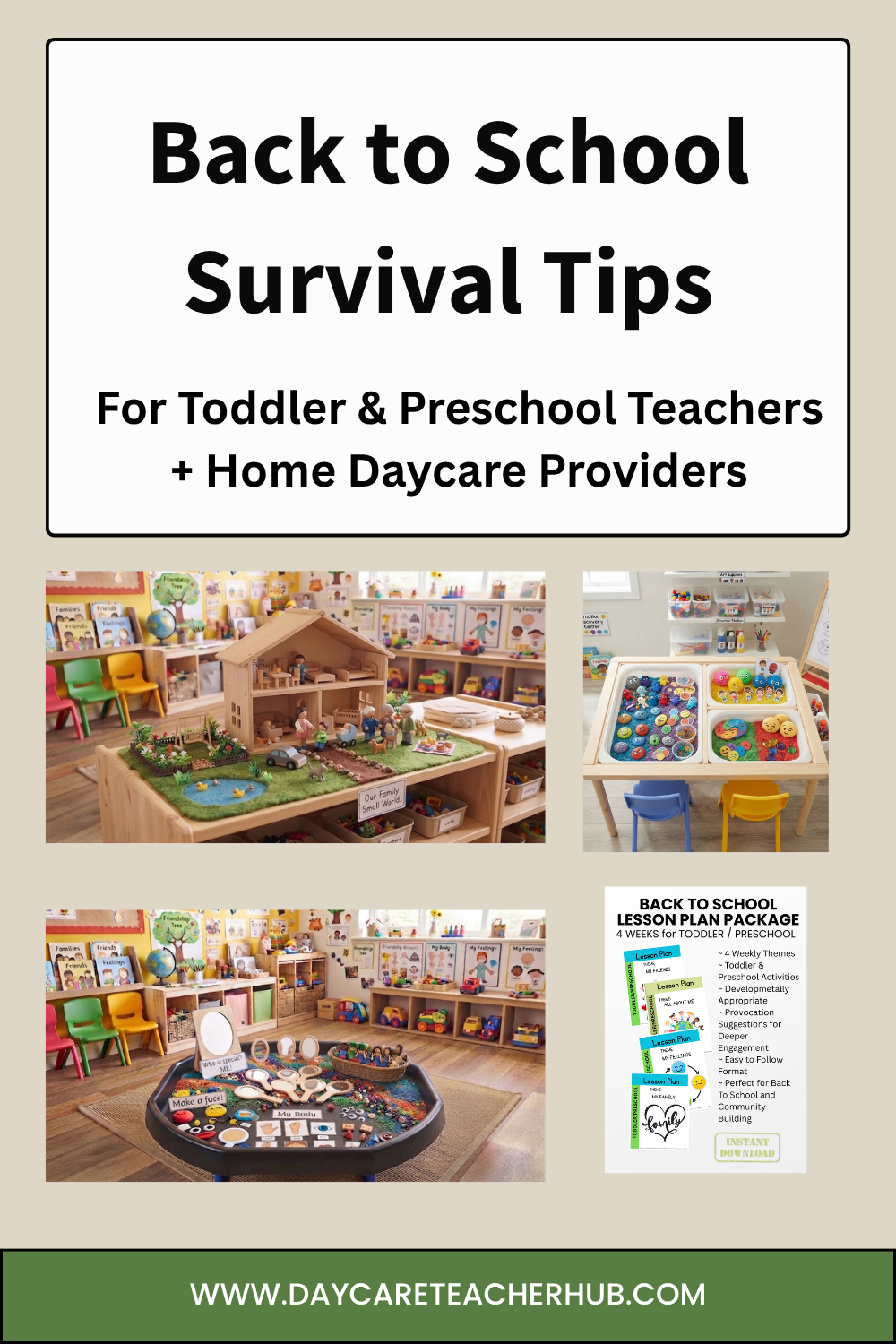
There’s something magical about the first few weeks of a new school year. New faces, new friends, new routines — and yes, a few tears along the way (from the kiddos, and honestly, sometimes from us too). Whether you’re welcoming children back into a classroom, guiding little ones through their very first days at daycare, or opening the doors of your own home daycare for the first time, back to school isn’t just about new backpacks and name tags. It’s about helping little ones feel safe, seen, and ready to grow in a brand new space.
This year, I wanted to make that transition a little easier — for you and for them. I put together a full Back to School collection built around four themes little learners naturally gravitate toward at the start of the year: All About Me, My Family, My Friends, and My Feelings. Each one is designed to help children settle in, build connection with their new classroom community, and start developing the social-emotional skills they’ll lean on all year long.
But themes and activities are only part of the puzzle. The other part — the part that keeps us up at night as educators — is helping children (and their grown-ups) through the harder moments: the tearful drop-offs, the clinginess, the meltdowns when it’s time to switch rooms or activities. So let’s talk about that too.
Why the First Weeks Feel So Big
For a toddler or preschooler, a new classroom isn’t just a new room — it’s a whole new world. New adults to trust, new peers to figure out, new routines to memorize, and often, the first real stretch of time away from a parent or primary caregiver. Separation anxiety and transition struggles aren’t signs that something is wrong. They’re a completely normal part of development, especially for children between 1 and 4 years old. Understanding that helps us respond with patience instead of pressure — for the child, and for ourselves.
Tips for Easing Separation Anxiety
1. Build a predictable goodbye routine. Children feel safer when they know what to expect. A short, consistent goodbye — a hug, a wave at the window, a special handshake — helps children understand that goodbyes are followed by hellos. Keep it brief; long, lingering goodbyes tend to prolong distress rather than ease it.
2. Give them a job right away. A child who is handed a task the moment they walk in (passing out name tags, feeding the class fish, choosing the first song for circle time) has less time to dwell on the goodbye and more reason to feel like they belong.
3. Offer a comfort object or connection point. A family photo tucked in a cubby, a small item from home, or even a laminated picture of mom or dad at the drop-off spot can offer quiet reassurance throughout the day.
4. Validate, don’t dismiss. “I know you miss your mom. It’s okay to feel sad. I’m here with you.” Naming the feeling (without trying to talk a child out of it) helps children feel understood, which often calms big emotions faster than distraction alone.
5. Keep your own energy calm and confident. Children pick up on our energy. A calm, warm, matter-of-fact demeanor at drop-off communicates safety even when a child is upset. It’s okay to comfort a crying child while still communicating, “This is a safe, good place to be.”
6. Lean on connection-building themes early in the year. This is where a unit like All About Me or My Friends does double duty — the very activities that build classroom community are the same ones that help anxious children form quick bonds with peers and educators, which naturally eases separation over time.
Tips for Smoother Transitions Between Rooms and Activities
Transitions — moving from circle time to centers, from one room to the next, from playtime to cleanup — are often where the wheels come off the wagon, even for children who’ve fully settled in. A few small shifts can make a big difference:
1. Give a warning before the transition happens. “In five minutes, we’re going to clean up and head to the gym room.” A simple heads-up (or a visual timer) helps children mentally prepare instead of being caught off guard.
2. Use a consistent transition song or signal. A short clean-up song, a specific chime, or a call-and-response phrase tells children’s brains, “something is changing now,” without needing extra verbal instruction in the moment.
3. Make the transition itself part of the fun. Hop like a bunny to the next room. Pretend to be tiptoeing mice. Carry an imaginary bubble in your mouth so no one talks until you arrive. A playful transition often prevents a resistant one.
4. Keep a visual schedule posted and refer to it often. Children (especially toddlers) feel more secure when they can see what’s coming next. Point to the schedule and narrate: “First circle time, then centers, then outside.” Predictability reduces resistance.
5. Transition one small group at a time. Moving an entire class at once can be overwhelming and chaotic. Sending children in small groups (by color of shirt, first letter of name, or table group) keeps the moving process calmer and safer.
6. Build transitions into your themed activities. A weekly theme like My Feelings is a natural place to introduce simple calming strategies — a breath, a stretch, a favorite song — that children can carry with them into every transition, not just the ones planned during that unit.
Starting a Brand New Daycare or Home Daycare
Switching rooms is one kind of transition — but starting at a completely new daycare, or a home daycare for the very first time, is a bigger leap for everyone involved. There’s no shared history yet, no familiar faces, and often no established routine to fall back on. If you’re opening your doors to new families this year (or welcoming children into your program for the very first time), a little extra intention up front goes a long way.
1. Offer a visit before day one. If at all possible, invite the family to come by for a short visit before their child’s official start date. Even 15-20 minutes of exploring the space, meeting you, and seeing where they’ll play helps take the mystery out of the first real day.
2. Send a “get to know us” introduction. A simple photo book, short video, or welcome letter introducing you (or your team), the daily routine, and what the space looks like gives children and parents something familiar to return to before day one even arrives.
3. Start with shorter days if you can. Whenever schedules allow, easing into full days rather than starting with a full 8-10 hour stretch gives children time to build trust in smaller, more manageable doses.
4. Ask parents what comforts their child. A favorite lovey, a specific way they like to be rocked for nap, a phrase that calms them down at home — this information is gold in the first few weeks. Parents are experts on their own child, and a quick intake conversation (or simple form) helps you meet a new child where they are right away.
5. Communicate throughout the day, especially early on. A quick photo, a short note, or a simple “she had a great snack time!” message reassures anxious parents just as much as it reassures the child. Confident, connected parents tend to have an easier time with drop-off, which trickles down to their child.
6. Give it time — and expect some rocky days. It’s normal for a new daycare relationship to take two to six weeks to really settle in. Some children adjust in days; others need longer. Consistency, warmth, and patience during this window matter more than any single strategy.
For home daycare providers especially, these early weeks are also when you’re building trust not just with a child, but with an entire family — so the same warmth and predictability that helps a toddler settle in also helps you build the kind of relationships that keep families with you for years to come.
Making Back to School Planning Easier for You, Too


Here’s the thing: separation anxiety, rocky transitions, and brand new beginnings are all so much easier to navigate when the rest of your day is already planned and running smoothly. That’s exactly why I built this Back to School collection — so whether you’re in a classroom, a childcare center, or your own home daycare, you can spend your energy connecting with your students instead of scrambling to plan another activity.
If you want to make the first month of school easier on yourself, I’ve got you covered two ways:
- Grab the full Back to School Bundle, which includes all four weekly units — All About Me, My Family, My Friends, and My Feelings — with daily circle times, crafts, provocations, math, literacy, science, gross motor, and music activities already planned out for you.
- Or, if you only need a theme or two right now, each unit — All About Me, My Family, My Friends, and My Feelings — is also available individually, so you can pick exactly what fits your classroom this season.
However you get there, I hope this school year — or this first year of your home daycare — is full of big growth, new friendships, and a whole lot of joyful, play-based learning for the little ones in your care. You’ve got this — and so do they.
Leave a Reply