
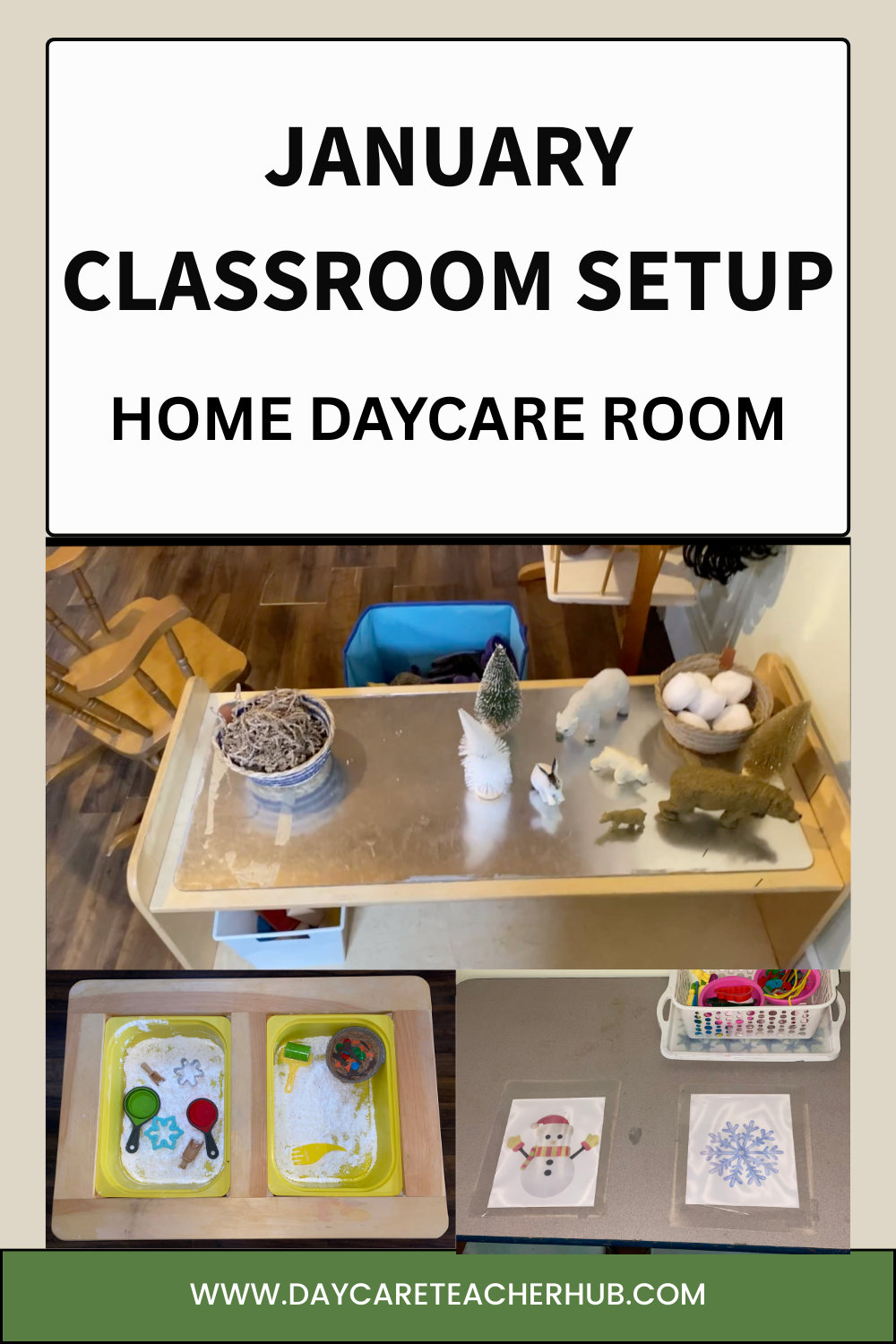
A Calm, Layered Approach to Snow, Hibernation, Arctic Animals & Health
January in our home daycare is all about slowing down, cozy exploration, and meaningful play. Instead of completely changing our classroom each week, I prefer to intentionally layer our themes so children can revisit ideas, deepen their understanding, and explore at their own pace.


For January, we cover:
- Snowman & Snowflake
- Hibernation
- Arctic Animals
- Health & Body Care (including dental)
Rather than separating these into strict weekly setups, I design the classroom so all themes gently coexist, with small additions each week. This gives children more time to engage, reduces overstimulation, and makes setup easier and more sustainable for me.
Here’s how I set up our classroom for January in a way that feels cohesive, calm, and inviting.
Start With a Neutral Winter Base
Before adding any specific themes, I create a soft winter foundation throughout the room.
Think:
- White, light blue, soft grey
- Natural wood, baskets, felt, and cozy textures
This neutral base allows you to add snow, animals, or health elements without things feeling busy or cluttered.
Easy winter base items:
- White or light blue table trays
- Felt or fabric snow
- Clear containers for loose parts
- Cozy reading rugs or faux fur mats
This base stays all month long.
Dramatic Play: Cozy Winter Living + Health Elements
Instead of changing dramatic play weekly, I create a winter home environment and layer health themes as the month goes on.
Base Setup:
- Play kitchen with neutral dishes
- Baby dolls with blankets and pajamas
- Stuffed animals (including bears for hibernation)
Layering Themes Slowly:
- Add scarves, mittens, and hats (snow theme)
- Add a “sleepy bear” basket with blankets (hibernation)
- Add toothbrushes, cups, and mirrors (health & dental)
- Add doctor tools or bandages the final week
Children naturally act out caring for themselves and others—perfect for January.
Sensory & Exploration Tables: One Bin, Multiple Themes
Rather than switching bins weekly, I set up sensory invitations that evolve.
Snow Bin Base:
- Fake snow, baking soda, or white rice
- Scoops, cups, and containers
Layer Over Time:
- Snowman loose parts (buttons, scarves, stones)
- Arctic animals added in week two
- “Sleeping animals” burrowed under snow or cotton
- Toothbrushes, cups, and pretend toothpaste for cleaning animals during health week
This keeps the sensory bin fresh while still familiar.
Small World Play: A Winter Landscape That Grows
Create one winter small world shelf that stays all month.
Base Setup:
- White felt or tray
- Wooden trees, rocks, igloos, or blocks
Theme Layers:
- Snowmen and snowflakes
- Bears and animals tucked into caves (hibernation)
- Arctic animals like polar bears and seals
- A small “clinic” or care station added during health week
Children return to this daily, building deeper storytelling each time.
Circle Time Wall: Visuals That Stay & Build
Instead of changing everything weekly, your circle time wall becomes a learning anchor.
January Wall Includes:
- Snowflake and snowman visuals
- Hibernating animals chart
- Arctic animals photos
- Body parts, hygiene, and dental visuals
Each week you simply highlight a different section, but everything remains visible so learning connects.
Bookshelves: Winter Stories With Purpose
Keep books accessible all month and rotate only a few forward-facing selections weekly.
Include:
- Snow and winter stories
- Animals sleeping or waking up
- Arctic animals and habitats
- Health, brushing teeth, and body care books
Children naturally choose books based on interest—no rushing required.
Art & Creativity: Open-Ended Winter Materials
Instead of theme-specific crafts everywhere, offer open-ended materials that work for all themes.
Examples:
- White, blue, and silver art supplies
- Cotton balls, pom-poms, foil, felt
- Recycled materials for building and creating
One child might make a snowman, another an arctic animal, and another a toothbrush holder—all from the same materials.
Why This Layered Approach Works So Well
- ✔ Less overstimulation
- ✔ More meaningful play
- ✔ Deeper learning connections
- ✔ Easier transitions for toddlers
- ✔ Less work for the provider
Children don’t learn in one-week blocks—and this setup respects that.
WANT TO SEE HOW I SET UP MY ROOM – WATCH THIS VIDEO
Final Thoughts
January is the perfect month to slow down and let learning unfold naturally. By setting up your classroom with a strong winter base and layering snow, animals, hibernation, and health themes over time, you create a space where children feel safe, curious, and confident to explore.
This approach has transformed January in our home daycare—and it’s one I come back to year after year.
SONJA